1/1

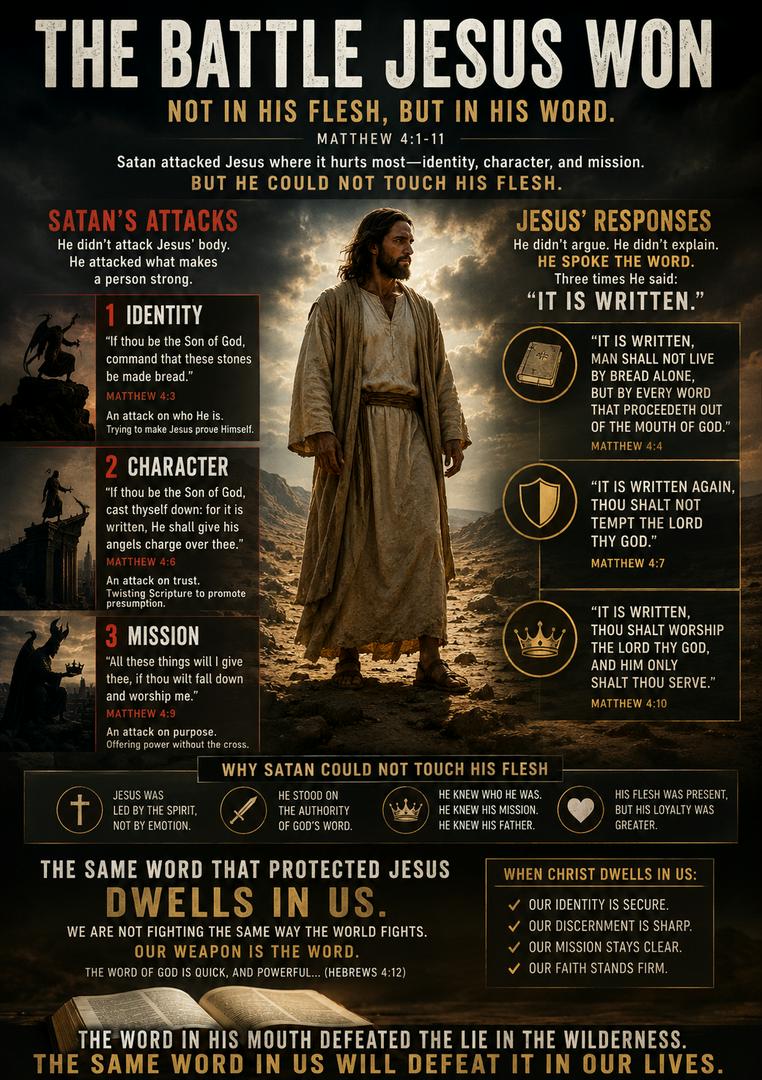
In Matthew 4, the temptation of Jesus shows something important about how spiritual conflict actually works. Satan does not begin by attacking Jesus physically. Instead, he targets identity, purpose, and trust—things that cannot be bruised or broken in the body. The repeated phrase “If thou be the Son of God…” is not a question for information; it is an attempt to shake certainty. It is an attack on identity before action, trying to pull Jesus away from who He knows Himself to be. The wilderness moment reveals that the real battlefield is not flesh, but authority and belief. Jesus is hungry, physically weak, and alone, but Satan never touches His body. Instead, he tries to twist perception—offering shortcuts, control, and proof without obedience. Each temptation is aimed at redirecting Jesus away from His mission. What makes Jesus’ response powerful is that He does not argue from emotion or circumstance. He answers with Scripture: “It is written…” Every response is rooted in something unchanging, higher than the immediate pressure of the moment. He stands on the authority of God’s word, not shifting conditions. This is why the Word becomes central for believers. When Christ dwells in us, it is not just inspiration—it is strength in the same form Jesus used. The same Word that resisted temptation now lives within, shaping identity, direction, and resistance against deception. RonC@Royal, Holy, Immortal Bible Study Series
13 hours ago

Timothy
which is what you really should take from Christ's temptation, "Satan knows scripture" the only thing.. though, he twists it, to make it sound accurate when it's nothing but a lie he's concocted from the pits of hell, and you see it constantly.. right here from some of um on good old News Break, that don't know what the hell they be talking about 🕊️
7h
Houston, TX
Reply

Ruthie
I’m great full Jesus lives with in me 💕
2h
Reply

Walker
Who's the white guy 👦
8h
Akron, OH
Reply
More comments ...
write a comment...