1/1

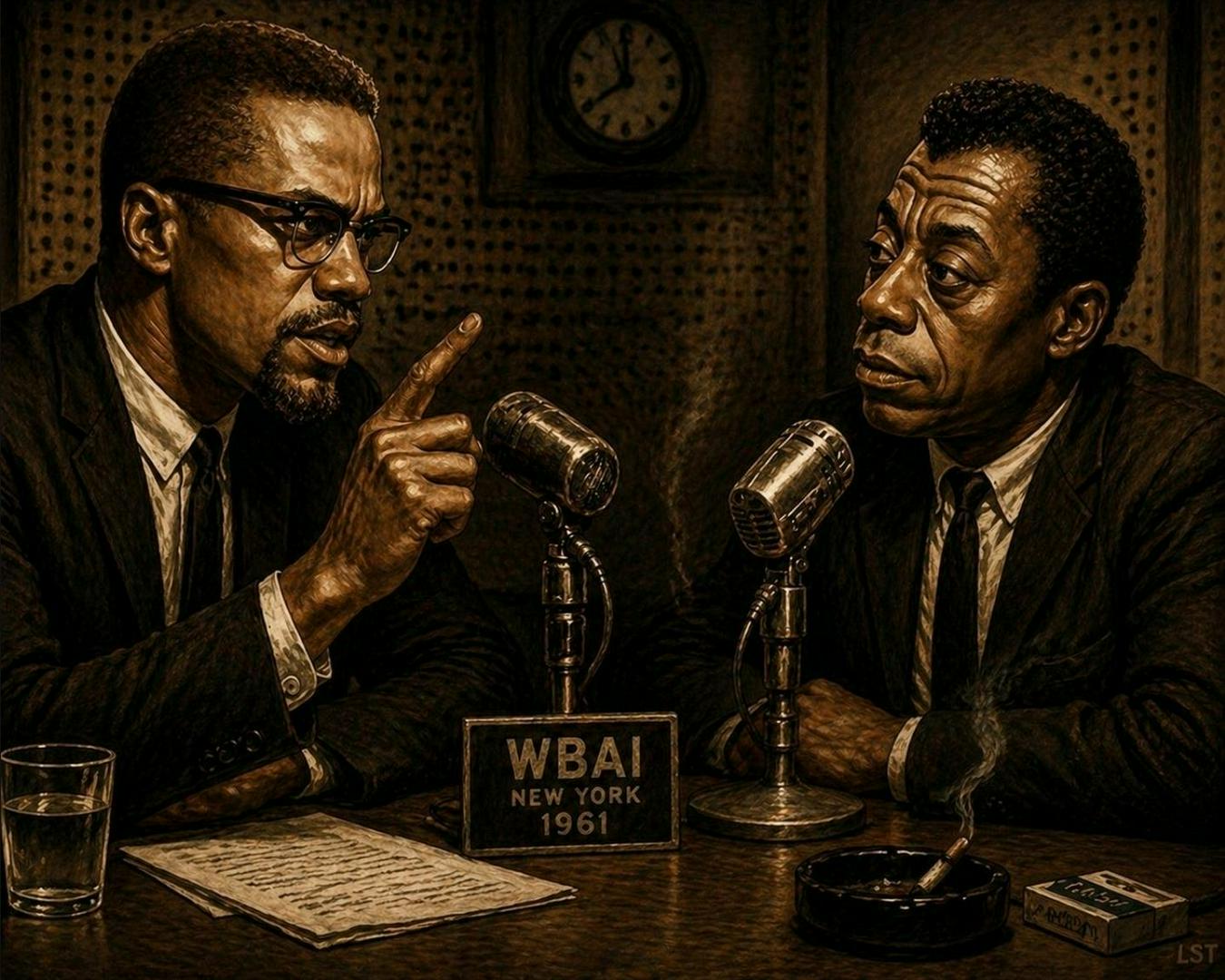
On April 25, 1961, Malcolm X and James Baldwin appeared in a WBAI radio broadcast in New York titled Black Muslims vs. the Sit-ins. The conversation also included Leverne McCummins. and it was not casual talk. It was a serious public exchange about racism, protest, integration, dignity, and what real freedom was supposed to mean in America At the time. sit-ins had become one of the most visible forms of protest against segregation. Young people were sitting at unch counters, refusina to move, and challenging a system that told them where they could eat, sit, learn, live, and belong. Malcolm X, speaking from the position of the Nation of Islam, challenged the idea that gaining access to spaces controlled by white societv should be treated as thehighest expression of freedom. His argument was not simplv about restaurants. It was about power. He questioned whether ntegration alone could solve a deeper problem rooted in racism, dependency, and control. James Baldwin brought another kind of weight to the discussion. Baldwin understood the moral violence of racism but he also understood the human cost of being forced to fight for basic recognition His voice often pushed bevond slogans and into the painful question underneath it all: what does America do to the people it refuses to fullv see? That is what made this exchange so mportant. It was not just a disagreement. It was a window into a larqer debate happening across the country. Should freedom mean access to the same public spaces, or should it meanself-determination beyond a system that had already proven itself hostile? More than six decades later, the conversation still hits because the questions were never small. Equality, power dentity, protest, and dignity were all sitting at that table Heavy hitters in one room. No small talk. No soft edges. Just truth beina tested out loud #MalcolmX #JamesBaldwin #OnThisDay #HistoryMatters #AmericanHistory
2026-04-26
write a comment...