1/1

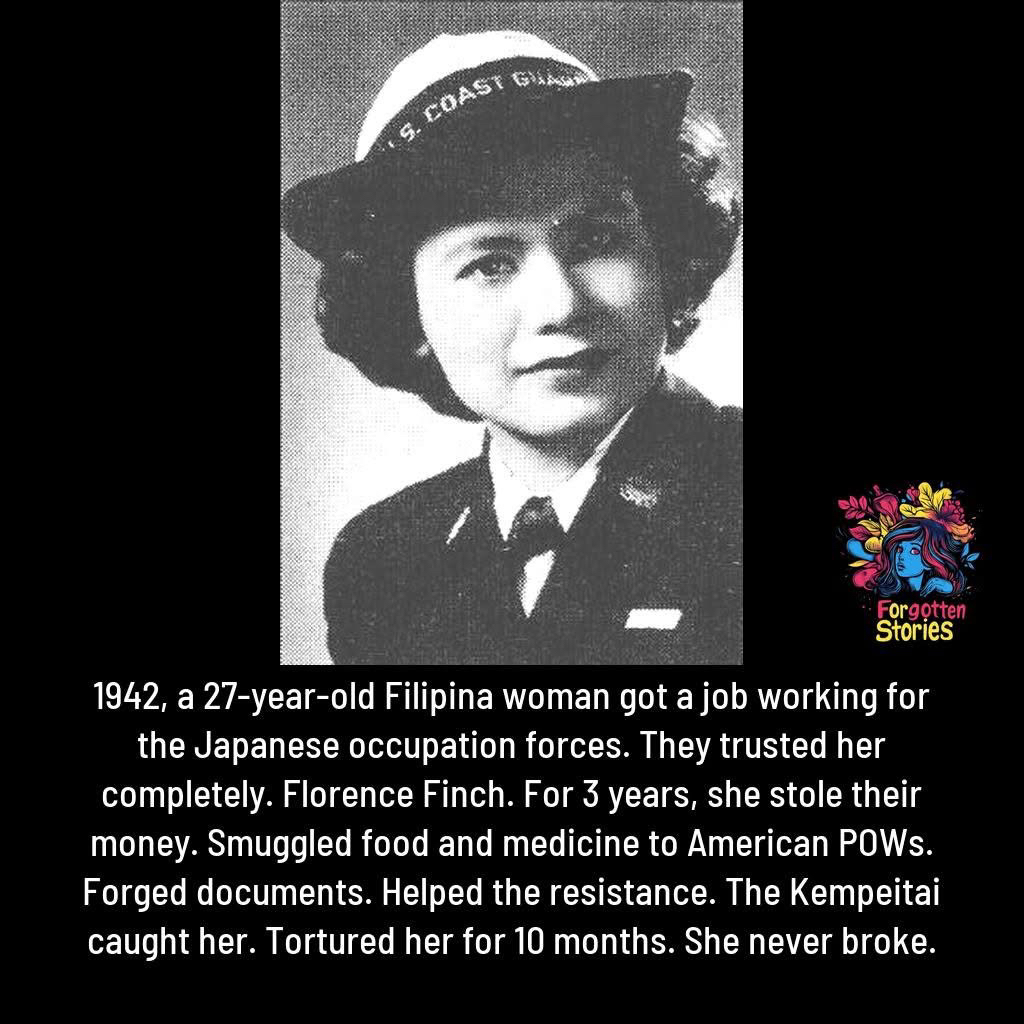
Florence Finch walked into Japanese headquarters every morning with a smile. Florence was 27 years old. Half-Filipina, half-American. Her husband Charles was an American soldier. Captured at Bataan. Prisoner of war. She needed to survive. Needed to help him. Needed to do something. So she got a job. Working for the Japanese. At the Port Area Terminal in Manila. Handling money. Processing payments. Trusted completely. The Japanese never suspected her. She was quiet. Efficient. Loyal. She was stealing from them every single day. Florence had access to Japanese funds. Payroll accounts. Supply budgets. Thousands of pesos passing through her hands. She started small. A few pesos here. A few there. Enough to buy food. Then she got bolder. Hundreds of pesos. Thousands. Embezzling Japanese occupation money. She used it to buy food. Medicine. Supplies. Everything the American POWs needed. Then she smuggled it into the camps. Through underground networks. Filipino resistance fighters. Anyone willing to risk their lives. The POWs at Cabanatuan. At Bilibid. At labor camps across Manila. All received packages. Food. Medicine. Money. They never knew where it came from. Just that someone was helping. Someone was keeping them alive. Florence worked with a network. Other Filipinos. Other resistance members. All risking death daily. They forged documents. Created fake transport orders. Smuggled American soldiers out of camps and into hiding. For three years, Florence stole Japanese money and used it to save American lives. She was careful. Meticulous. Never took too much at once. Never left obvious traces. But in October 1944, someone betrayed the network. The Kempeitai came for her. The Japanese secreta police. The most feared organization in occupied Philippines. They arrested Florence. Took her to Fort Santiago. The prison where people went to be tortured. To die
1 days ago
write a comment...