1/1

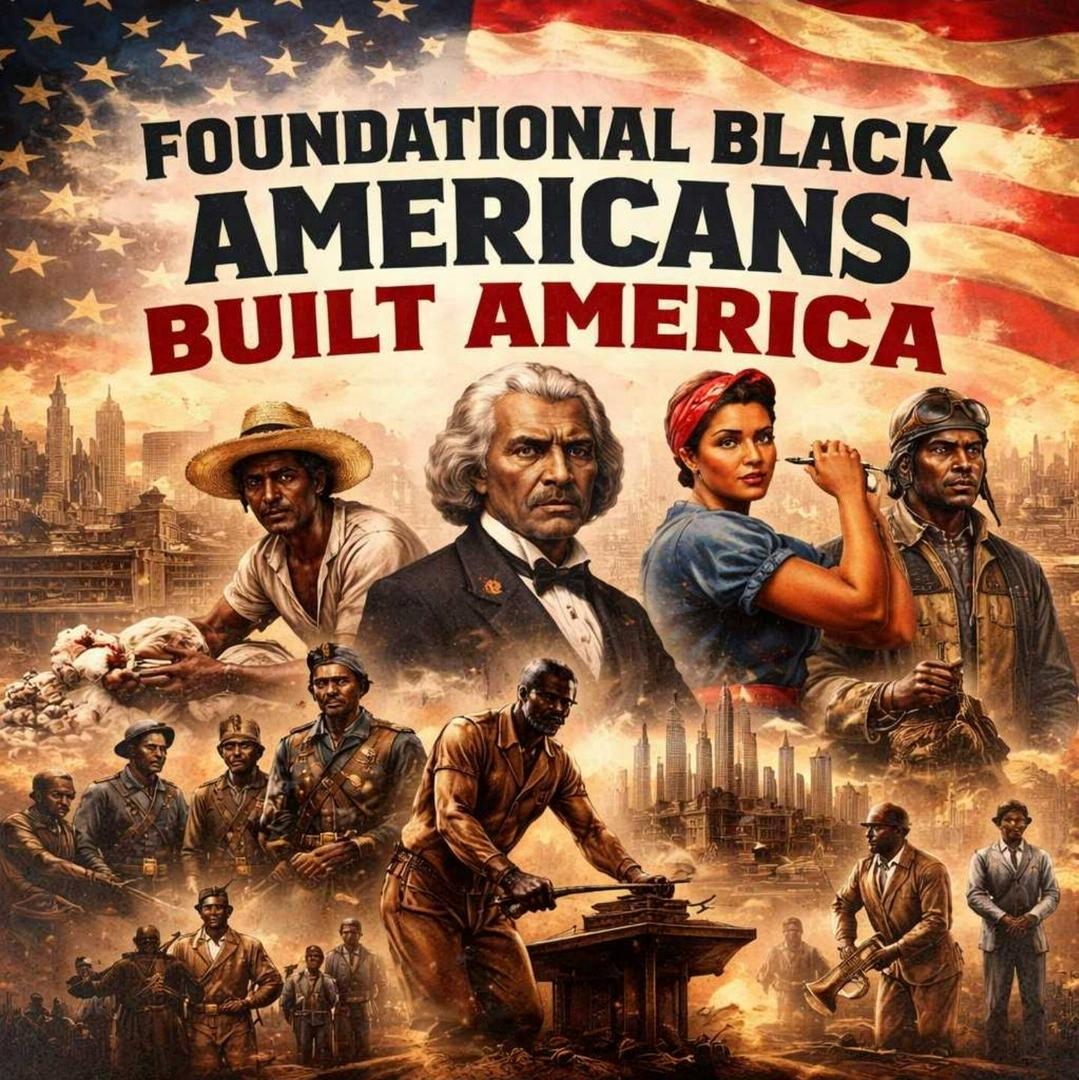
Foundational Black Americans Built the Foundations of the United States The United States was built-economically physically, and culturally--on the labor and contributions of Foundational Black Americans, the descendants of those enslaved on American soil From the 1600s through the Civil War enslaved Black labor powered the agricultural economy that made America wealthy. Cotton, tobacco, rice, and sugar exports financed banks, railroads, ports, and Northern textile mills. By the mid-1800s cotton was the nation's most valuable export-produced almost entirely through forced labor Beyond agriculture, Black artisans worked as carpenters, masons, blacksmiths shipbuilders, and ironworkers, helping construct early American cities, roads levees, and public buildings-including infrastructure in Washington, D.C After emancipation, Black Americans playeda central role in Reconstruction, serving in egislatures and helping establish public school systems across the South. During the Great Migration, millions strengthened Northern industry--working in steel, auto manufacturing, railroads, and defense plants during both World Wars Black military service--from the 54th Massachusetts Infantry Regiment to the Tuskegee Airmen-reinforced a ong-standing demand that America live up to its democratic ideals. Culturallv, Black Americans shaped the nation's identity through music, literature, religion, and art-foundations of what the world recognizes as American culture The economic wealth, infrastructure democratic institutions. and cultural influence of the United States cannot be separated from the contributions of Foundational Black Americans. Their labor and resilience are not a footnote to American history--they are central to it #FBA
2 hours ago

Ulao Creek Ursula
The African has never risen, cannot rise.....4000 years behind Modern Humans evolution.....The Obama Somali Brigades of FundamentalTransformation.....Sadly, Obama will not live long enough to swing for this African Infestation of FUNDAMENTAL TRANSFORMATION. Do they not see the absurdity, the ingratitude? They crave the fruits of our ancestors’ toil—our cities, our peace, our abundance—yet scorn the roots that bore them. They demand more of their own kind here, as if our lands must bend and break to become the mirror of what they fled. Why must we, the sons and daughters of the North, the builders of this world, bear the blame for their discontent? Our fathers did not toil through centuries to hand over their legacy to strangers who despise it. Let them answer: if their ways were so noble, why did they come? If ours are so vile, why do they stay?
1h
New Brighton, MN
Reply(1)
2

Shannon Maraessa
So this whole country and everything in it was built by black people. 🤔 LMAO
2h
Richmond Heights, OH
Reply(1)
2

Fred Flintstone
oh dear lord. Who wrote this? The arrogance is stifling..
2h
St. Clair Shores, MI
Reply(4)
2

I'm not with them
Your history and receipts says everything anybody need to know bout america. Look at you today. In love with HATE and division. Columbus didn't discover anything. TRUTH SOCIAL
10m
Paducah, KY
Reply

James Davis
🤣😂🤣😂, right 😆
1h
Keysville, GA
Reply
1

Kaye
Ya damn Skippy 🤔
20m
Colesville, MD
Reply
More comments ...
write a comment...