1/1

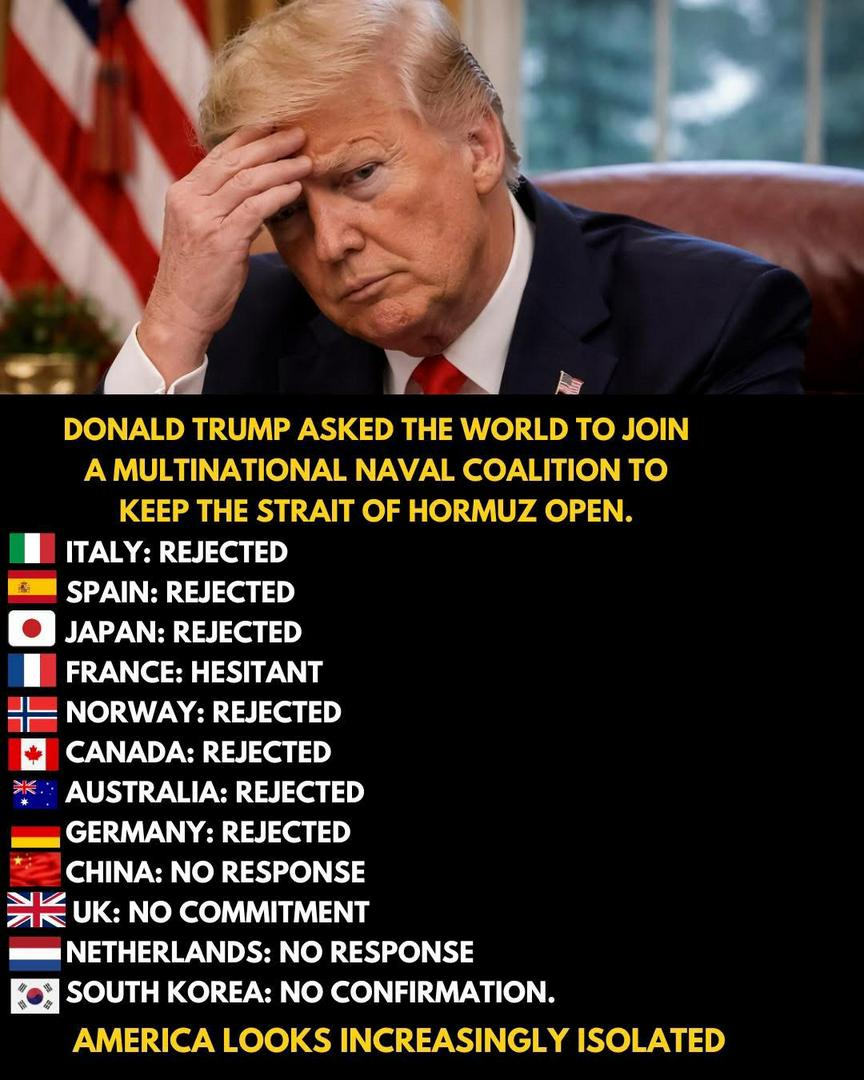
The United States has called on countries to join a multinational naval coalition to secure the Strait of Hormuz, one of the world’s most critical energy routes, as tensions in the region continue to rise. The aim is to build a coordinated international effort to keep the waterway open and protect global oil shipments. However, the response from many allies and major powers has been cautious and, in several cases, unsupportive. A number of countries have reportedly declined to participate, while others have stopped short of making firm commitments. Several governments appear reluctant to become directly involved in a potential military escalation in such a sensitive region. Key Western allies have expressed hesitation, emphasizing diplomatic solutions or limited defensive roles rather than joining a U.S.-led military operation. At the same time, some major global players have remained silent or noncommittal, reflecting the complexity of the situation and the risks involved. Overall, the reactions suggest that Washington is facing difficulty in building a unified coalition. The situation highlights widening differences among global powers over how to respond to rising tensions and underscores the challenge of securing broad international support for military operations in a volatile geopolitical environment.
8 hours ago

Beverly Ham
Apparently the other countries are smarter than trump.
6h
Granite City, IL
Reply
8

Rodney
EVEN HALF WAY AROUND THE WORLD , THE ORANGE "TURD" HAS NO "FRIENDS" 😩✖️🤬👎💩
5h
Carson City, NV
Reply
7

Josie Huerta
TRUMP'S EPSTEIN WAR
5h
Phenix City, AL
Reply
6

Patty Gilfeather
they all know trump is just trying to get out of going to jail
5h
Great Falls, MT
Reply
4

Langdon Wallace
2h
Port Charlotte, FL
Reply(2)
2

D. Robert Tester
karma a bit harder ain't it twumpy
3h
High Point, NC
Reply
1
David Calof
The administration should have anticipated that Iran would close the Straits of Hormuz and made securing them their first military objective to protect American interests. Instead, their efforts were directed toward securing Israeli interests, so they dropped the ball on the Strait.
1h
Seattle, WA
Reply
David Calof
Trump fails to understand that the mutual protection pact in the NATO alliance is only evoked if one of the member countries is attacked, not if one of the member countries starts a war of choice.
1h
Seattle, WA
Reply

Bdmon
He thought these countries was his little toys, wave his hands everyone moves. They're tired of his shit
2h
Ocala, FL
Reply

Edward Jenkins
why so you can go back out and blame them
they got your number 0
1h
Hyattsville, MD
Reply
More comments ...
write a comment...