1/1

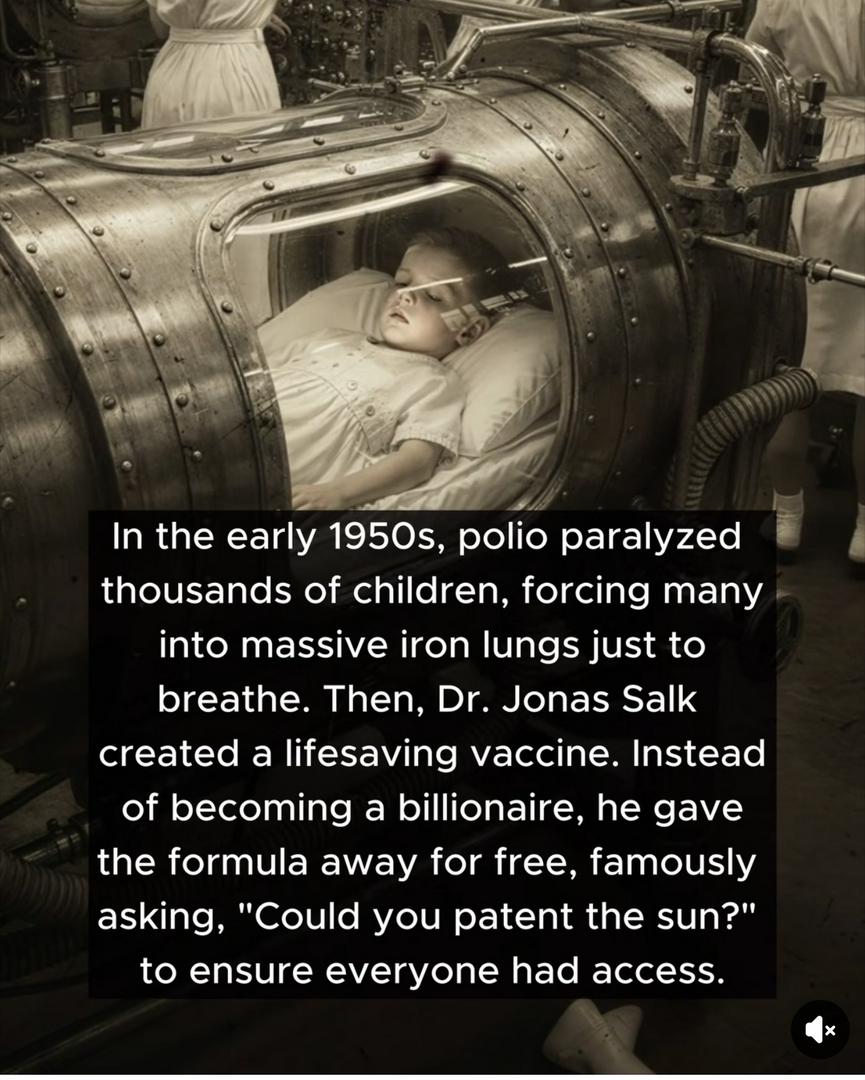
During the summer of 1952, the United States faced its worst polio outbreak in history. Panic swept the nation as nearly 58,000 cases were reported. The virus targeted the nervous system, leaving thousands of children paralyzed. Hospitals across America quickly filled with giant metal tubes called iron lungs, which physically pushed air into the chests of young patients who could no longer breathe on their own. Parents kept their kids away from public pools and movie theaters, terrified of the invisible threat. Behind the scenes at the University of Pittsburgh, a medical researcher named Jonas Salk worked tirelessly to find a solution. He developed a killed virus vaccine that proved incredibly effective during massive field trials involving over a million schoolchildren. On April 12, 1955, the government officially declared his vaccine safe and effective. When journalist Edward R. Murrow asked him who owned the patent, Salk gave a legendary response. He said the patent belonged to the people and asked, "Could you patent the sun?" Salk walked away from an estimated seven billion dollars to ensure the vaccine reached every child, ultimately wiping out the disease in the country.
4 days ago

Beverly Ham
Get your children a vaccinated. polio is no joke.🙏🙏
3d
Granite City, IL
Reply
More comments ...
write a comment...