1/1

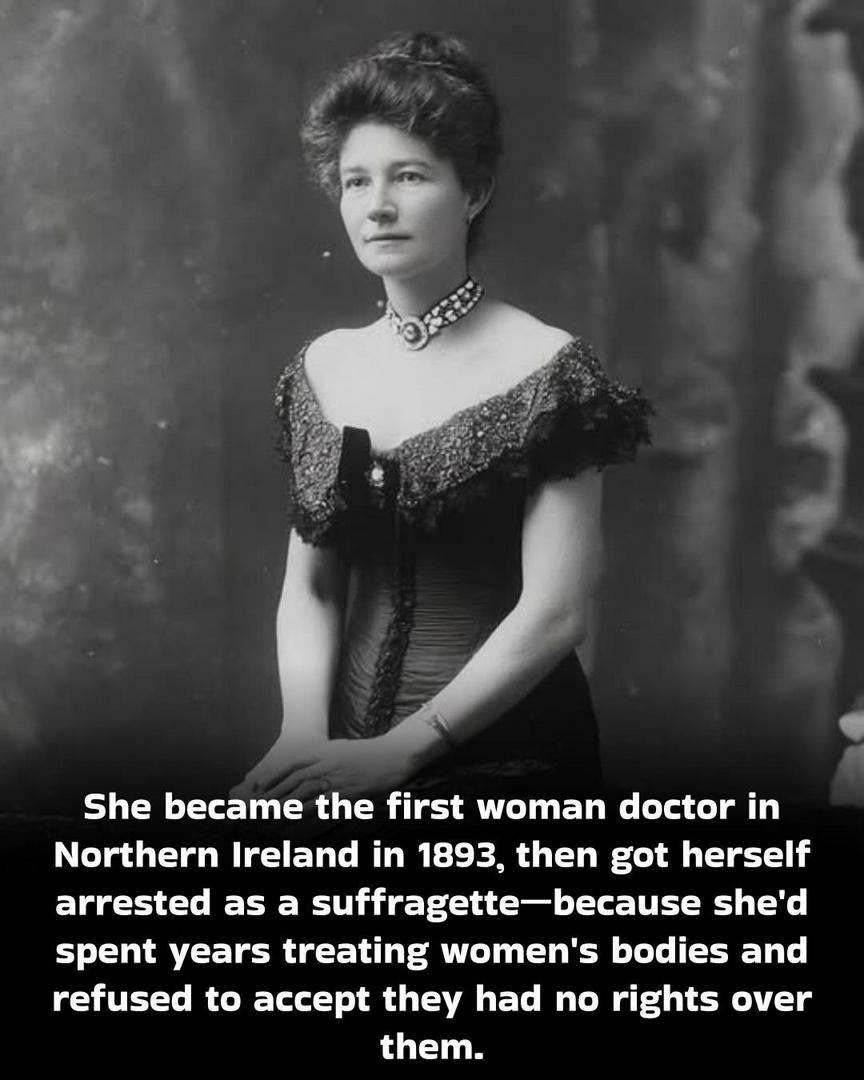
She became the first woman doctor in Northern Ireland in 1893, then got herself arrested as a suffragette—because she'd spent years treating women's bodies and refused to accept they had no rights over them. Belfast. 1889. Elizabeth Gould Bell walked into the lecture theatre at Queen's College Belfast knowing every eye would be on her. Not because she was late. Not because she was unprepared. Because she was a woman in a room built to exclude her. The medical students—all men—stared. Some whispered. Some smirked. The message was clear: you don't belong here. Elizabeth sat down, opened her notebook, and began taking notes on anatomy. She was twenty-two years old. She had no intention of leaving. Medical education in 1889 was designed to keep women out. Not explicitly—the rules had recently changed to technically allow women—but through a thousand small hostilities that made it nearly impossible to succeed. Professors who wouldn't call on female students. Clinical instructors who refused to let women examine male patients. Classmates who made studying together impossible. A culture that treated a woman's presence as inherently provocative, as if learning about the human body was inappropriate for someone who possessed one. Elizabeth endured all of it. She studied anatomy while male classmates made comments about whether women could handle "such material." She practiced surgical techniques while instructors questioned whether women had the physical strength or mental fortitude for medicine. She attended clinical rounds where doctors spoke to her male peers and ignored her completely. And she outperformed them anyway. In 1893, Elizabeth Gould Bell qualified as a physician from Queen's College Belfast. She became the first woman in Northern Ireland to earn a medical degree. She was twenty-six years old. She'd proven she could do everything they said women couldn't.
8 hours ago
write a comment...