1/1

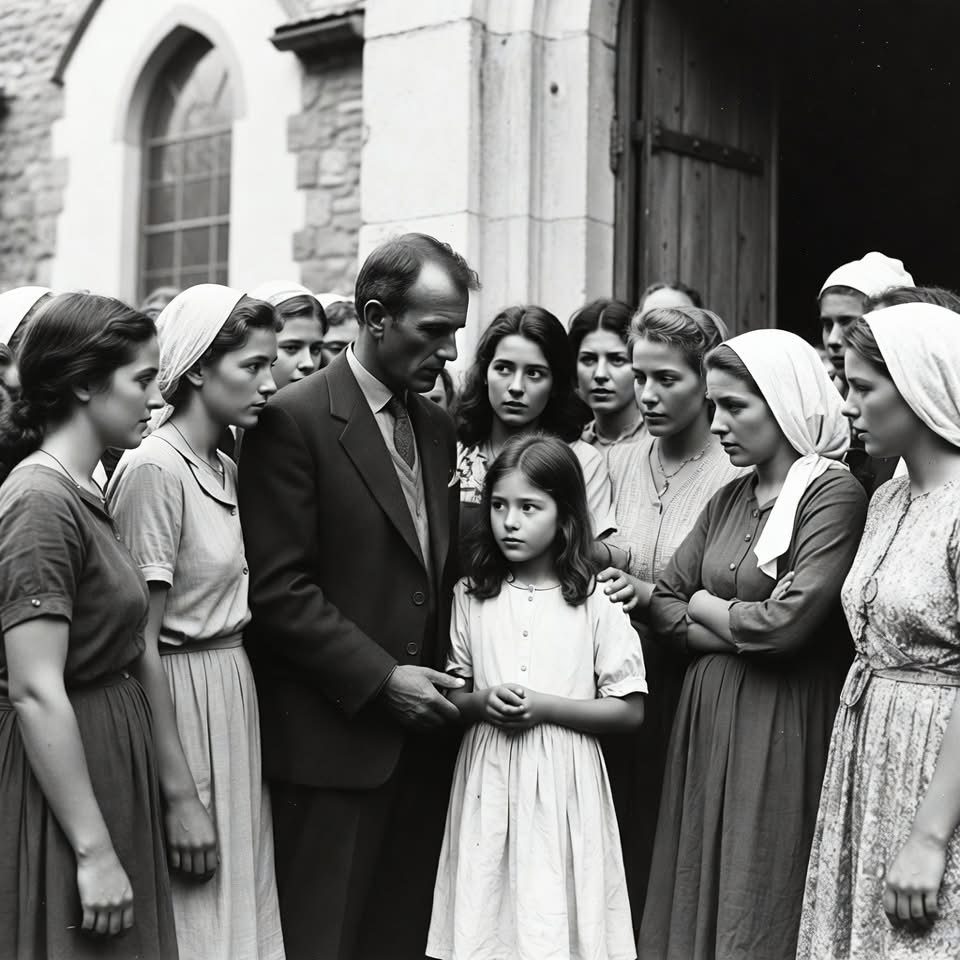
Twelve-year-old Grace Mitchell sat in the front pew of the small rural Georgia church on a Sunday morning in 1917, unaware that behind the closed doors of the church office, five women from the congregation were having an intense conversation with Grace's parents about the arranged marriage plans for Grace to a thirty-one-year-old widower, and these five church women—led by fifty-five-year-old Mrs. Sarah Henderson, the pastor's wife—were united in their determination that this marriage should not happen, that twelve was too young regardless of local customs or family financial needs, and that the church community had a responsibility to protect Grace even if it meant confronting her parents about their plans. Mrs. Henderson had learned about the planned marriage when Grace's mother had asked the pastor to perform the ceremony in three weeks. While child marriages were not uncommon in rural Georgia in 1917, something about this particular situation had troubled Mrs. Henderson—Grace was exceptionally young even by local standards, the age gap was significant, and Grace herself seemed frightened and unhappy whenever the upcoming marriage was mentioned. Mrs. Henderson had spoken with Grace privately and confirmed that the girl didn't want to marry, was scared of leaving her family, and had been crying herself to sleep every night thinking about it. Mrs. Henderson had then quietly gathered four other women from the church—all mothers, all women who remembered being young and powerless—. I know it's not our business technically, but if we don't speak up, who will? That child needs someone to protect her." The five women had agreed to approach Grace's parents together, presenting a united front rather than a single voice that could be easily dismissed. In the church office after Sunday service, the women made their case: Grace was too young,
2026-02-14

Chelle Chell
These Replican brain washed fools! Every child predator/pedophile has been republican. I get it though you guys will continue to push a narrative that suits your purpose and outcomes. I pray your children are not on the receiving end. Then again it's okay to you guys right!
29d
Charlotte, NC
Reply(61)
75

Bernard Deren
Unfortunately you dems don’t care or understand the country you’re living in. we have a constitution that says we vote for a president for a four year term and he is our president,not my president but our. I haven’t liked a dem president since Johnson,whom I regretted later, but nevertheless they were our president. Our Constitution is our bible ,understand it and follow it ,not the news media. It’s what keeps this great country “Great”. Wake up and smell the roses.🥰
28d
Reading, PA
Reply(56)
62

Lisa Lisa
God wants people to wait till 30s or so when they have matured
30d
Des Moines, IA
Reply(32)
16

Beverly Batsche
So true bl as her heart only twelve men are just so into that especially the dems . I am glad she was saved from this . God bless the women had the courage to come forward and helped this child out .
30d
St Louis, MO
Reply(28)
31

Madeline Vermilyea
What is the point of this story? Is it to say Christians had arranged marriages. Yes the Southerners in Georgia were extremely poor.
But America 🇺🇸 thanks to God and American Capitalism we no longer are poor Southerners. And I as an American will Not Condone the Sharia Law in Our Homeland.
🙏🏽🙏🏽🙏🏽🙏🙏🙏🙏🇺🇸🇺🇸🇺🇸🇺🇸🇺🇸
30d
Tampa, FL
Reply(9)
38

Barb Coker
I was married at 15and the only thing I knew about marriage was that you did what your husband told you. I was beaten when ever my husband wanted to. I was told that was his right because he was my husband . This is not AI it’s fact!
29d
Minot, ND
Reply(15)
32

Diane Wilson
I don’t care your politics, child mar rage is wrong!
30d
Lees Summit, MO
Reply
34

Lynn Willrich
Cora, you said it yourself! “Women’s roles were to marry and have children.” Not 12 year old girls. 🤦♀️
29d
Lakewood, OH
Reply(10)
25

Donald Cobb
My Grandmother was married to a man when she was only 13.im sure it was a situation a lot like this as her family was dirt poor. The man she married was old enough to be her grandfather. On their way home the husbands friend stop their horse & buggy & told the husband something secretly , so those two left together and grandma never seen him again. I don’t know if she had the marriage annulled or what but she was married again by the age of 15 .all together she was married 5 times & out lived all of her husbands , she’d had 6 children & lived to be 94
30d
Bedford, IN
Reply(2)
21

Vita Stokes
So 12 is old enough to marry an adult male 19 years older than her however, 12 isn't old enough to move away from home on her own to live alone, to get a legal job to support herself, 12 isn't old enough to drive a car, to pay rent, isn't old enough to buy a car to get to work, Yet again 12 isn't old enough to get the credentials to, own a car to get to a job, she's not old enough to work even, if she had a job. 12 isn't even old enough to be outside after 8pm , let alone to, live alone after moving from home. 12 isn't old enough to babysit w/o an adult in the house, to oversee that the child babysitting is properly watching the child being babysat. Giving birth was difficult enough for me so, trying to imagine a "child" 8-to12 years younger than I was, when I gave birth at 20 & 24 years old respectfully 1 vaginally and, 1 emergency C-section. A 12 year old should be playing with dolls, enjoying her childhood and not juggling a paedophile and pregnancy. MAKE IT MAKE SENSE!
29d
Gary, IN
Reply(5)
18
More comments ...
write a comment...