1/1

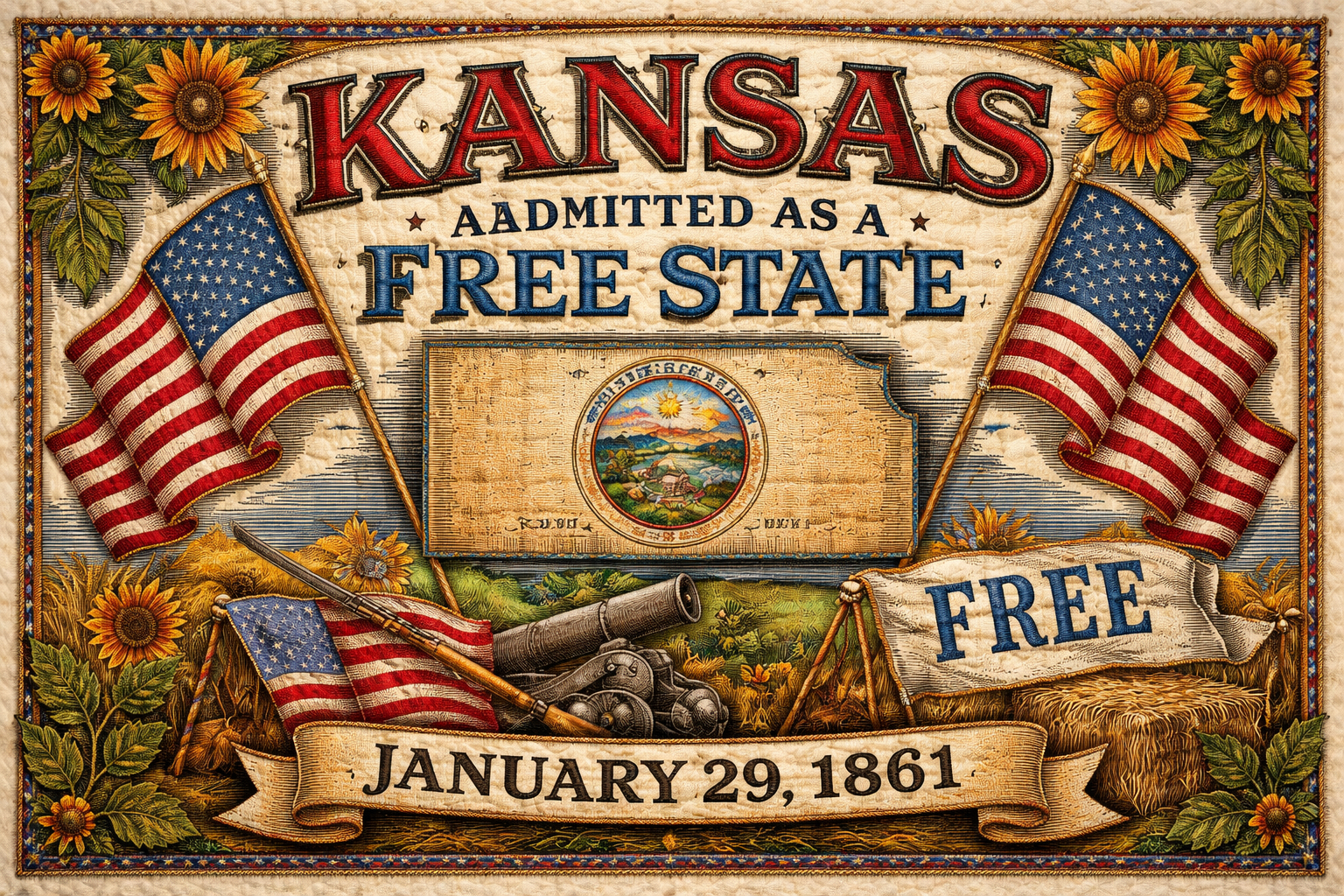
On January 29, 1861, Kansas was admitted to the Union as the 34th state, entering as a free state after years of violent political struggle that foreshadowed the Civil War. Its admission marked a turning point in the national conflict over slavery and revealed how deeply divided the country had become. Kansas was not a typical territory seeking statehood. After the Kansas–Nebraska Act of 1854 allowed settlers to vote on whether slavery would be legal, pro-slavery and anti-slavery factions flooded the region. Elections were disputed, rival governments formed, and armed clashes broke out. The violence was so severe that the period became known as “Bleeding Kansas.” Over several years, Kansas drafted multiple constitutions, some permitting slavery and others rejecting it. Each reflected the shifting balance of power and the pressure exerted by national political forces. The struggle in Kansas was closely watched across the country because it demonstrated that compromise on slavery was no longer holding. By the time Kansas was admitted as a free state, seven Southern states had already seceded from the Union. The decision further weakened the political influence of slaveholding states and intensified tensions between North and South. Just weeks later, the Civil War would officially begin with the attack on Fort Sumter. Kansas entered the Union bearing the marks of a conflict that could no longer be contained. Its path to statehood showed that the fight over slavery was no longer abstract or distant. It was unfolding in real time, on American soil, with consequences that would soon engulf the nation. #January29 #OnThisDay #KansasHistory #AmericanHistory #CivilWarEra #USHistory #Statehood #BleedingKansas #HistoricalMoments
Kansas • 2026-01-29

thetruth
yet they act like the hickkk south. they think their texas.
02-06
McPherson, KS
Reply(2)
More comments ...
write a comment...