1/1
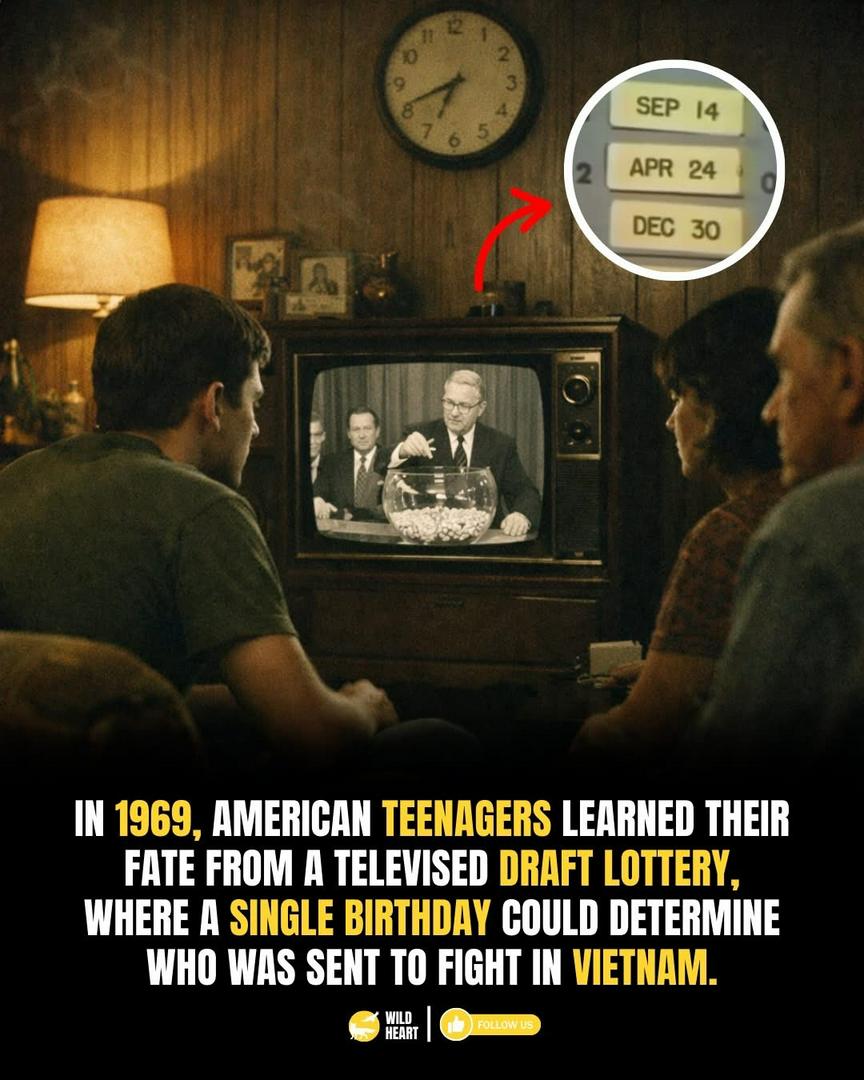
Imagine being nineteen years old and realizing your future depends on a birthday pulled from a container on live television. That wasn’t a metaphor. In December 1969, during the Vietnam War, the United States introduced a draft lottery that tied military service to birthdates, broadcast nationwide as a matter-of-fact civic procedure. The system was run by the Selective Service System, and it applied to young men between eighteen and twenty-six, many of whom were still figuring out who they were, let alone where they stood on war. The idea was supposed to make the draft fairer, replacing opaque local board decisions with random chance. Instead, it exposed how impersonal the process had become. An early number could mean induction within months. A late number could mean safety, at least for now. Same country, same age, wildly different outcomes decided in seconds. What’s easy to miss today is how ordinary the moment looked. No speeches, no warning, no drama added for effect. Just officials drawing slips of paper while families watched quietly from living rooms across the country. Relief and dread landed at the same time, often in the same household. That randomness became a breaking point. Protests intensified, trust in government eroded, and the draft itself became a symbol of inequality and distance between policy and people. By 1973, the draft ended, and the United States moved to an all-volunteer force. The lesson lingers. When a nation turns life-altering decisions into a lottery, the real cost isn’t just who goes to war, but how a generation learns to see power, fairness, and responsibility. #fblifestyle #history #vietnamwar #militarydraft #americanhistory
2026-01-18

non negotiable
I thought it kind of sucked to make something so personal like being drafted into the military a public announcement knowing the person whose number was drawn did not hit the Powerball but because of Auntie War protesters and draft Dodgers America wanted a balanced draft which never happened was sang by Creedence Clearwater Revival Fortunate Son
01-18
Bethel, PA
Reply(1)
9

Gary Saint Manchester
yeah, I remember..scary as hell
01-18
Punta Gorda, FL
Reply
8

Kent Coulson
I'll never forget that day. The first date pulled was September 14. My birthday. Fortunately I was not eligible for another year and that year it was 243.
01-19
Anderson, CA
Reply(2)
4

Pablo
I was fortunate, my number was 343. 366 was the best one could get. Approx 1/2 of my friends had low # and served. If I would have had a low # I would have served.
01-18
Oceanside, CA
Reply(4)
2
Majority Rules
Trump was watching something else on his television I’m guessing. I remember it too as I lived through it.
01-18
Reply(1)
4

VooDoo
I remember vaguely how stressful this shit was. Of course not for the rich and elite like Trump.
01-19
Palm Beach Gardens, FL
Reply(2)
2

Mozus A Best
Draft Lottery Is Likely To Return Under Trump
01-19
Lexington, KY
Reply(2)
2

Edward Farrell
Korea and Vietnam were absolute evils. Wars where children were slaughtered by the United States of Amurdera PURE ABSOLUTE EVIL!
01-19
Reply
3

Lee Rudell
yes remember watching it on TV
01-18
Jefferson, GA
Reply
3

Richard Williams
I was 185, and immediately felt relieved. they reported at the time that anything under would probably be drafted.
A lot of my friends with lower numbers immediately went out to enlist. I'm still sorry to this day for the friends that didn't make it home.
01-19
Columbus, OH
Reply
2
More comments ...
write a comment...