1/1

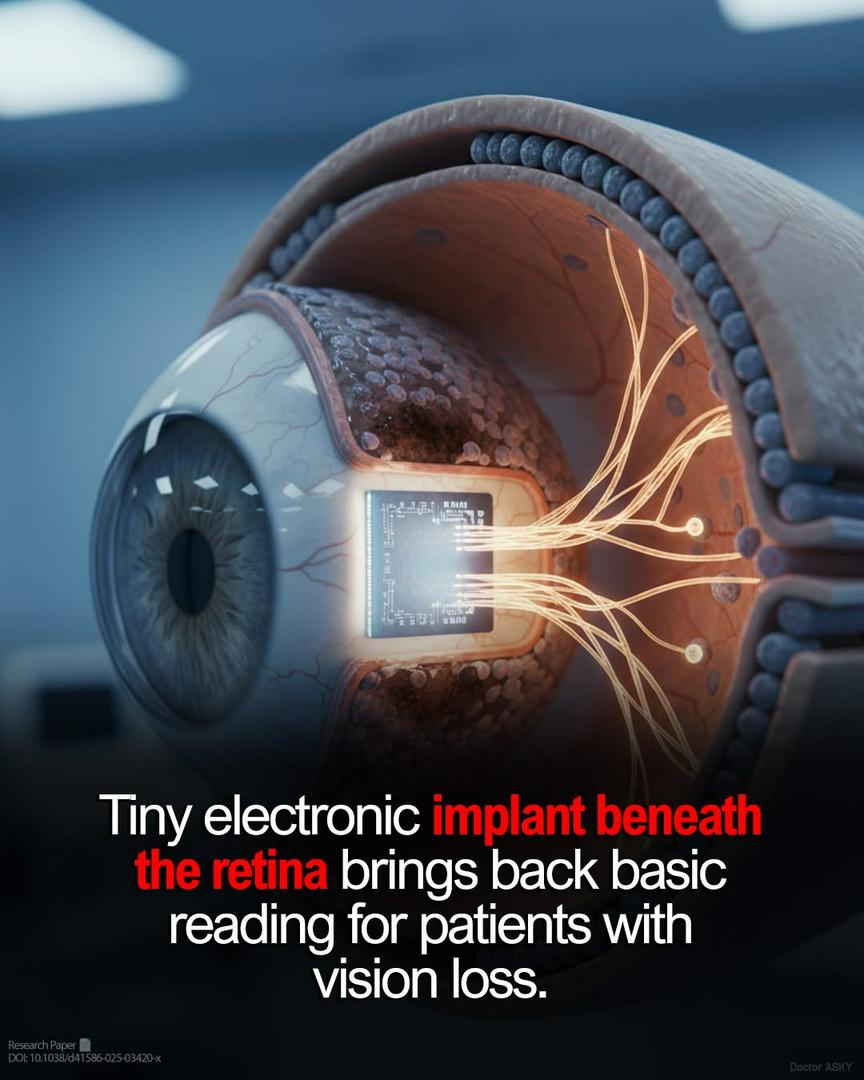
Tiny electronic implant beneath the retina brings back basic reading for patients with vision loss. A tiny electronic implant measuring just 2 millimetres by 2 millimetres and only 30 micrometres thick is showing remarkable promise for people with severe visual loss due to outer retinal diseases such as age-related macular degeneration. The device is surgically placed beneath the retina where photoreceptor cells are no longer functioning. It works by capturing visual information through external camera glasses and converting that into electrical signals that directly stimulate the remaining retinal cells. Users in a recent trial regained the ability to recognise letters and even read short text passages, showing a clear functional improvement in daily vision. While the advancements are impressive, the technology remains in early stages and is not yet widely available. The current implant offers limited resolution, a narrow field of view, and relies on external equipment such as camera glasses and processing units. Long-term durability, how the implant performs across a wide range of lighting conditions, and how it integrates with the user’s visual environment are still being studied. The device’s success suggests that previously irreversible blindness may now be treatable, but broader trials are needed before it becomes a standard clinical option. The breakthrough opens up a path for other retinal and optic nerve disorders to be treated with similar implants. Research Paper 📄 DOI: 10.1038/d41586-025-03420-x
22 days ago

Liberty-🗽
Keep doing the research!
19d
Mount Pleasant, MI
Reply

Sue
Now that is NEWS!
18d
Evansville, IN
Reply
More comments ...
write a comment...