1/1

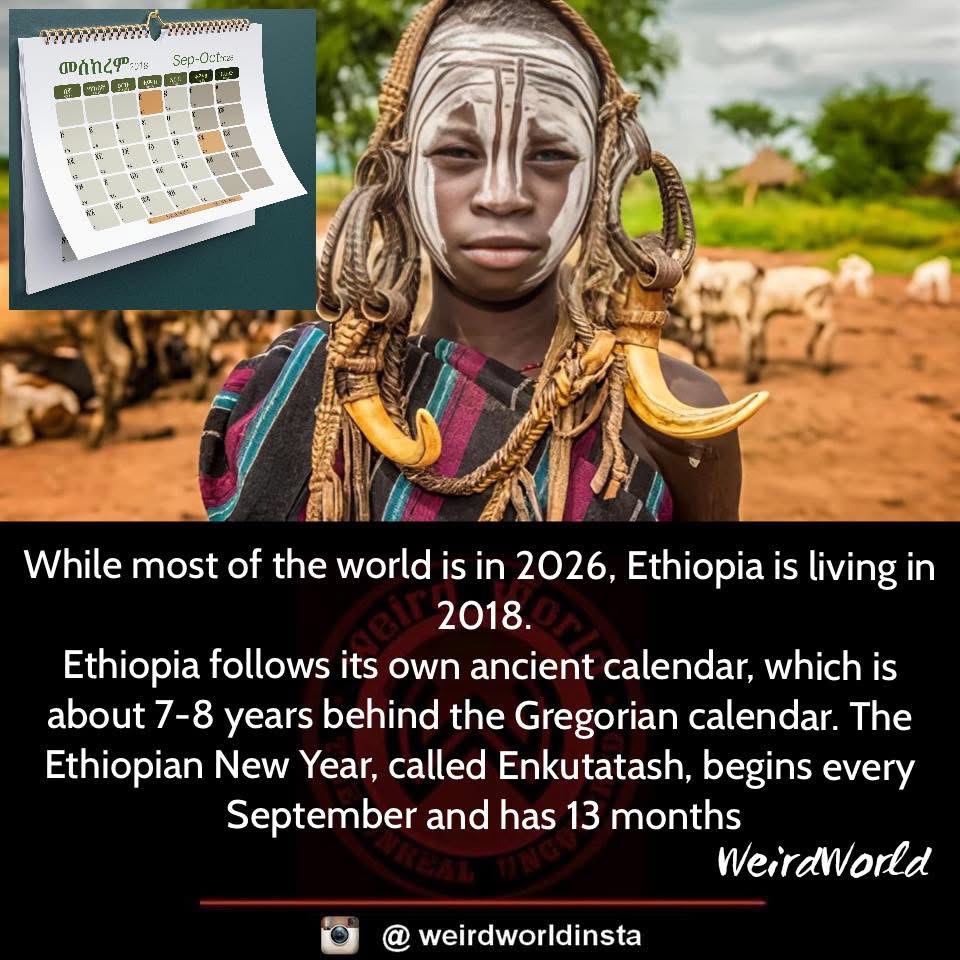
While much of the world follows the Gregorian calendar, Ethiopia continues to live by a system that is centuries old. The Ethiopian calendar is based on ancient Coptic traditions and is currently about 7 to 8 years behind the global calendar. That’s why when the world is in 2026, Ethiopia is officially in 2018. One of the most fascinating parts of this calendar is that Ethiopia has 13 months. Twelve months have exactly 30 days each, and the final month—called Pagume—has only five days, or six during a leap year. This extra month is often seen as a time for reflection and renewal. The Ethiopian New Year, known as Enkutatash, is celebrated in September, not January. It coincides with the end of the rainy season, when the countryside blooms with yellow flowers, symbolizing fresh beginnings. Ethiopia even measures time differently during the day. The day starts at sunrise, around 6 a.m. in global time, which Ethiopians call 12 o’clock. This makes local timekeeping perfectly aligned with daylight rather than the clock. #facebookrepost #nevercolonized
2026-01-02

ray barber
The United States New Year doesn't represent a new beginning of anything other than laws and bills. and it falls in the middle of winter when everything is frozen over 😆
01-03
Rochester, NY
Reply(1)
9

Ralston Thomas
I will be younger by going to Ethiopia 💕
01-03
Ruskin, FL
Reply
5

RPO in NJ
“That’s why when the world is in 2026, Ethiopia is officially in 2018”. Ethiopia is a lot, lot further back than 2018. More like 1818.
01-02
Egg Harbor Township, NJ
Reply(1)
4

⏱️👀around 🫵🏿
Interesting, thanks
01-02
New Orleans, LA
Reply(1)
4

Emotional Intellectual
They split the day into 2 parts as the Bible does in Genesis. In other words they begin the day at sunrise and end the day at sunset as the night begins at sunset, the night will end at sunrise. It’s a natural clock. And the evening and the morning is 1 day. 🙂
01-04
Reply(1)
3

Tim Keeton
very cool info. one of my old buddies from my school years was from Ethiopia. I didn't know these things.
01-03
Chino Valley, AZ
Reply
2

Bitchybougoise
13 months that have 28 days. A natural calendar aligned with the moon is what the Gregorian took from us. Damn Romans
01-05
Hightstown, NJ
Reply
1
More comments ...
write a comment...