1/1
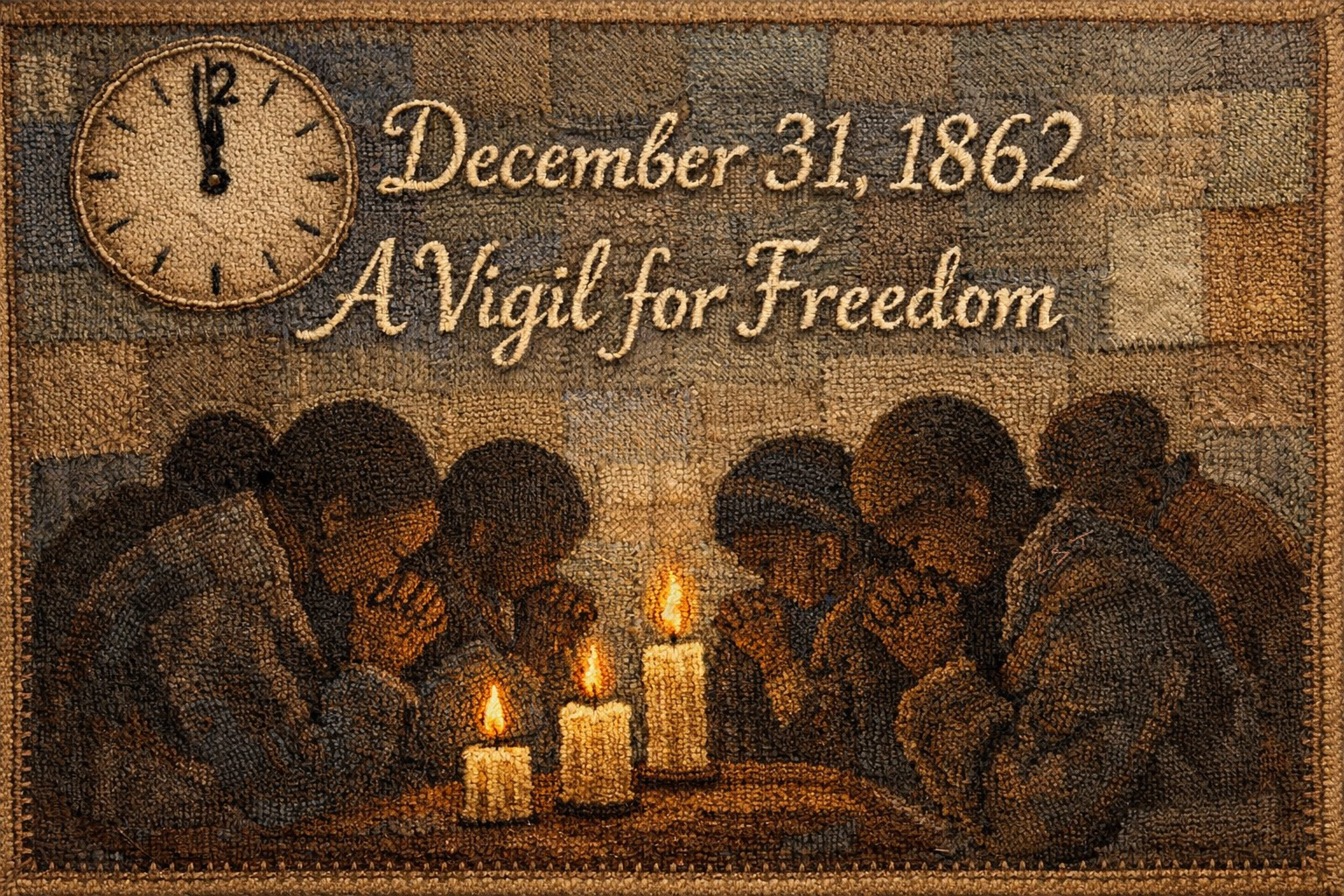
December 31, 1862 marked a night of waiting across the United States. In enslaved quarters, free Black neighborhoods, and church sanctuaries, African Americans gathered, knowing that something promised had not yet arrived. The Emancipation Proclamation was set to take effect at midnight, but until the calendar turned, freedom still existed only as words on paper. These gatherings were not uniform celebrations. Many were vigils. People prayed, sang hymns, and watched the clock, shaped by a history that taught caution toward promises made by the federal government. Some had heard rumors; others listened as newspaper notices were read aloud. Many understood that even once the proclamation became law, its reach would be uneven and its enforcement uncertain. President Abraham Lincoln had signed the final version of the Emancipation Proclamation earlier that month, explicitly tying emancipation to the Civil War effort. It declared freedom only for enslaved people in states still in rebellion, excluding loyal border states and areas already under Union control. Freedom, even in its announcement, was conditional and strategic. Still, December 31 carried deep meaning. It marked the closing hours of a system that had defined generations of Black life through bondage, even if it did not immediately dismantle it everywhere. Families held hands knowing the next day might not change their circumstances, but it signaled a shift in how slavery was justified and defended by law. When midnight arrived and January 1, 1863 began, there were no official ceremonies or guarantees of safety. In some places there were tears and songs; in others, quiet resolve. What united these moments was the understanding that freedom would not arrive fully formed. It would have to be claimed, defended, and fought for. December 31, 1862 reminds us that liberation often begins in waiting..: and in choosing to believe change is possible before it becomes real. #OnThisDay #December31 #Emancipation
2025-12-31

William Fredericks
This is a good article very interesting
01-01
Pottsville, PA
Reply
1
Banessa Mojica
Glory2glory ☦️☦️☦️
01-01
Philadelphia, PA
Reply
1
More comments ...
write a comment...