1/1

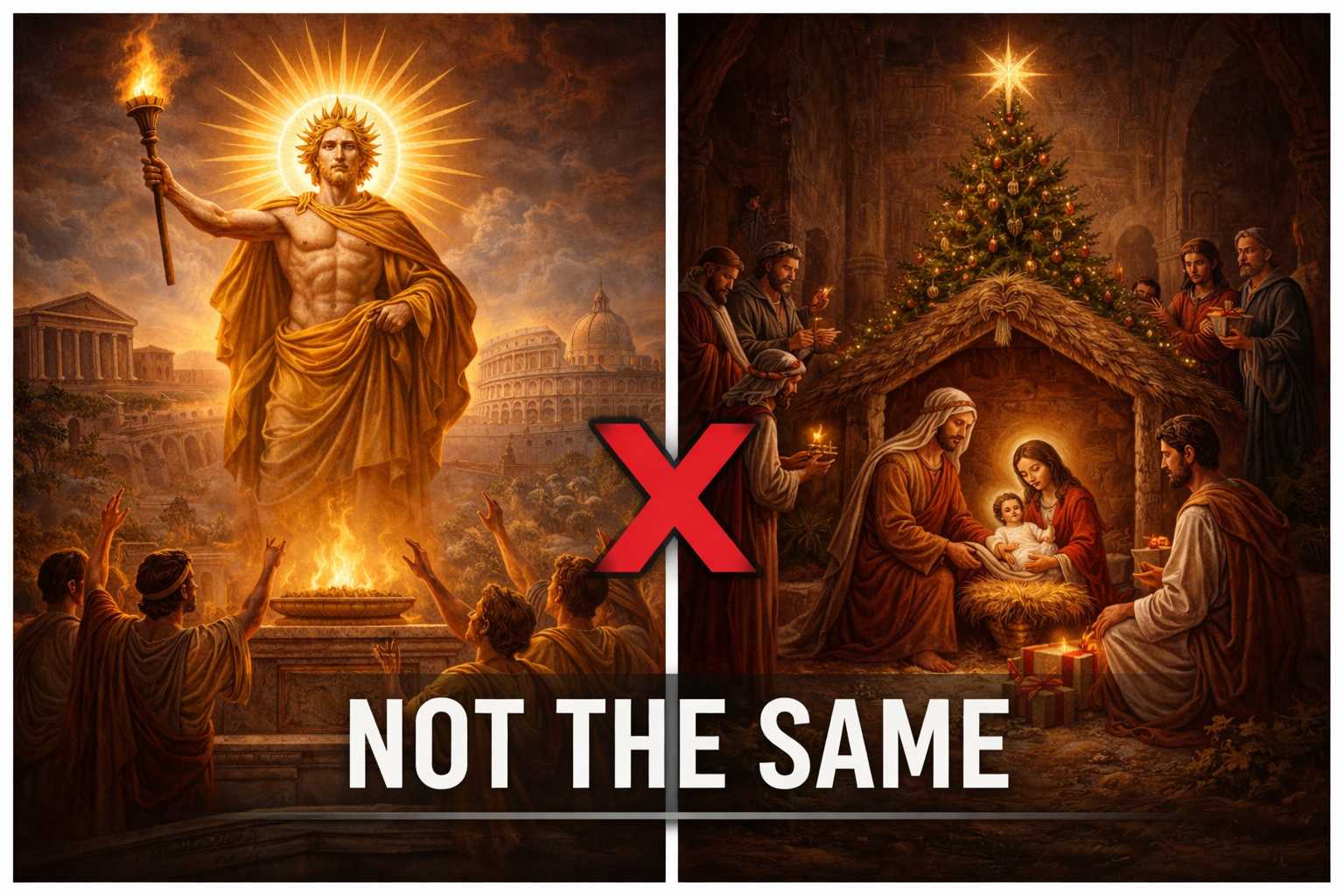
Sol Invictus: Who Copied Whom? (Part 3) When the timeline no longer supports borrowing, the argument often shifts again. This time to imagery. Christians speak of light, therefore they must be borrowing sun worship. This move sounds intuitive. It is also historically careless. ❗🌞Light does not mean sun worship🌞❗ Christian Scripture uses light as a metaphor long before any Roman solar cult is elevated. Light represents truth, revelation, and moral clarity. At the same time, Scripture consistently condemns worship of the sun, moon, and stars. The metaphor and the deity are not the same thing. Calling God “light” is no more sun worship than calling Him a “rock” is geology worship. Symbols communicate meaning. They do not redefine belief. If light language equals sun worship, then nearly every culture and religion collapses into the same charge. That standard proves too much and explains nothing. ❗Why this argument replaced Saturnalia❗ Most accusations began with Saturnalia. When its dates and practices failed to align, Sol Invictus became the fallback because it shares a date and sounds simpler. Few people check the timeline. Fewer still ask who benefits from the accusation. But switching explanations when one collapses does not strengthen the claim. It weakens it. The historical tension If Christians were already associating December 25 with Jesus before Sol Invictus is elevated, the accusation reverses direction. Instead of Christianity borrowing from paganism, pagan Rome may have been reacting to Christianity’s growth. That possibility is uncomfortable, but it cannot be ignored. So disagreement is welcome. Refutation is welcome. But it must answer the timeline, not just repeat the claim. Who copied whom❓❓ #HolidayTraditions #Christian #ChristmasDecor #PaganTraditions #Christmas2025
2025-12-24
Army_Vet777
😂I knew the statute of liberty looked familiar
12-24
Shelby, NC
Reply
More comments ...
write a comment...