Kate Morries+FollowGood morning friends Make today count for something that lights you up. Call it joy, growth, or adventure — do one thing that makes you smile ❤️ 10Share
Kristen Cooper+FollowIs there a song about your hometown?Singing a song is one of the most common ways to express our feelings. Is there any song mentioning your hometown ? How did it describe? If any, please tell us.00Share
queen@+FollowHave you ever gone through a situation where you almost gave up all you have tried and done all along till something in you will tell you to keep on pushing because you are almost there? If you have tell us about your story .00Share
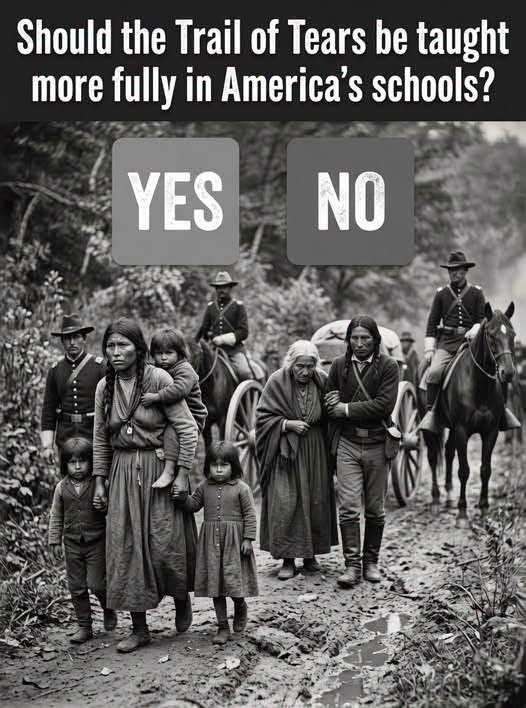
justme +FollowTHOUSANDS OF NATIVE AMERICANS DIED SO AMERICA COULD EXPAND WESTWARD. That is the part of history many people were never fully taught. The Trail of Tears forced Native nations from their ancestral lands after the U.S. government ordered their removal. Families lost homes, farms, sacred places, and loved ones. Some walked over 1,000 miles in brutal conditions. Disease spread quickly. Food was scarce. Winter storms killed many who were already weak from exhaustion. Mothers carried sick children while trying to survive. Elders were left behind after collapsing from fatigue. Entire families disappeared during the journey. Yet Native communities endured. Today, descendants still remember the stories passed down by survivors. The trauma did not end when the marches ended. Its effects continued through generations. Many Indigenous people say schools often rush through this history too quickly. A few textbook pages cannot fully explain the suffering, resistance, and resilience of Native nations. History is not meant to make people comfortable. It is meant to help people understand truth. Because a country cannot fully heal from the past if it refuses to fully acknowledge it. Why this matters: • Indigenous remembrance • Historical truth • Cultural resilience • Respect for Native communities • Honest education Should the Trail of Tears be taught in greater detail in U.S. schools? YES or NO?00Share
queen@+FollowAlways believe in your faith and not the fear because once you overcome the fear you are a winner #fear #faith 00Share
Dawn Jaeger+FollowI Love God he is good..no matter what life gives me I need to be strong and able to keep the peace within my heart #John_16_3300Share
Jacquelyn+FollowI love God with all I have in my body. I'm very grateful and my mind is troubled but I know that through Christ all things are possible. and I thank you my Creator.. In Jesus name Amen#John_16_3300Share