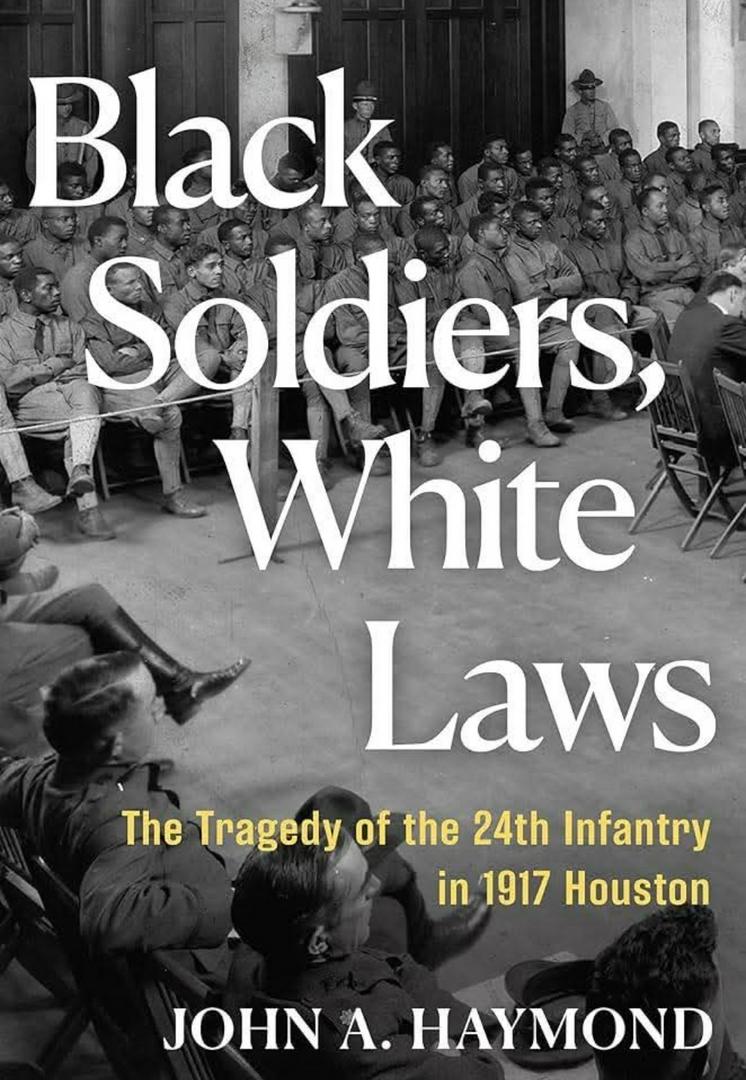
The first full and definitive narrative of one of the most shocking and largely unknown events of racial injustice in US history: the execution of nineteen Black soldiers in Texas
On the sweltering, rainy night of August 23, 1917, one of the most consequential events affecting America’s long legacy of racism and injustice began in Houston, Texas. Inflamed by a rumor that a white mob was arming to attack them, and after weeks of police harassment, more than 100 African American soldiers of the 3rd Battalion, 24th Infantry Regiment, took their weapons without authorization and, led by a sergeant, marched into the largely Black San Felipe district of the city. Violent confrontations with police and civilians ensued and nineteen lives were lost.
The Army moved quickly to court-martial 118 soldiers on charges of mutiny and murder, even though a majority of the soldiers involved had never fired their weapons. Inadequately defended en masse by a single officer who was not a lawyer and had no experience in capital cases, in three trials undermined by perjured testimony and clear racial bias, and confronted by an all-white tribunal committed to a rapid judgment, 110 Black soldiers were found guilty—despite the fact that no mutiny had, in fact, taken place. In the predawn darkness of December 11, thirteen of them were hanged at Fort Sam Houston in San Antonio—hastily and in secret, without any chance to appeal. News of the largest mass execution in the Army’s history outraged the country and inspired preventive legislation; and yet six more Black soldiers were executed in early 1918 and the rest were sentenced to life in prison.
The Houston Incident, as it became known, has remained largely untold, a deep stain on the Army’s record and pride. Award-winning historian and Army veteran John A. Haymond has spent six years researching the events surrounding the Incident and leading the efforts that ultimately led, in November 2023, to the largest act of retroactive clemency in