Category Page food

Food

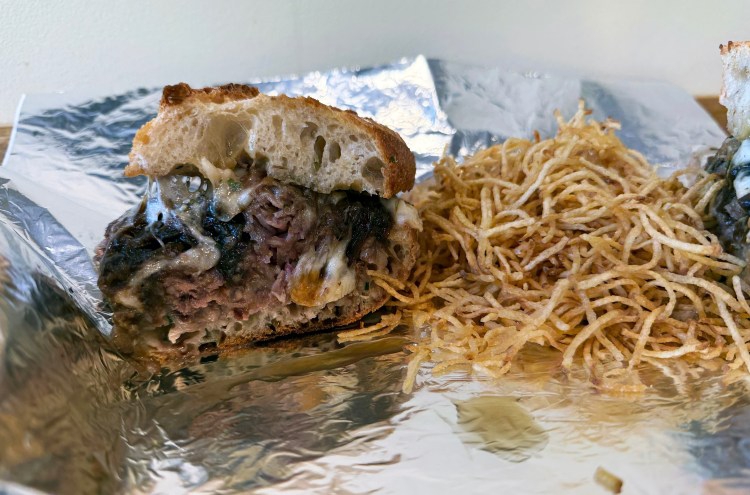
People Still Wait Hours for This $32 French Dip From an Influencer The sandwich at Salt Hank’s West Village shop sells out daily.Recipe content creator Henry Laporte (aka Salt Hank) opened Salt Hank’s in the West Village to much fanfare in 2025. Laporte, who has nearly 5 million followers across social media platforms, teamed up with chef Daniel Rubenfeld (a Thomas Keller alum) to make their viral French dip. The restaurant only serves a handful of menu items: said sandwich, shoestring fries, and accouterments like cole slaw. (Rumor has it a chicken Parm dip is now available on Wednesdays, too.) What to order You’re here for the $32 French dip. Piled onto an almost-too-crusty Frenchette demi baguette (Laporte tasted nearly 150 options before picking this one) are tender, dry-aged prime rib, Provolone, horseradish aioli, and seven-hour caramelized onions. The sandwich is so large that you may need to unhinge your jaw to eat it. It comes with an au jus cup that’s too tiny to comfortably dunk your sandwich into (if you’re a corner dipper, it’ll suffice), but it is delicious. Fellow horseradish lovers, order a side of the aioli. The amount on the sandwich isn’t enough. I don’t know if I’d call them “fries” as much as “potato sticks.” What I do know is that while I’m normally a shoestring fry hater, I still think you should order them. What to drink Don’t skip the limeade. The drink cuts through the richness of the sandwich. Insider tip Get here at least 30 minutes before opening. When I arrived at 11 a.m. on a Saturday, the line was down the block. Near opening time, an employee walks down the line and asks if you want to eat inside or get your sandwich to-go. If you choose indoors, they have a seat ready for you when it’s your turn to eat. Although there’s a substantial wait, getting your sandwich is smooth and efficient.

Nonie3701

I am a single, disabled, grandmother raising a 13 year old grandchild. I get my disability check, less than $1,000 a month. I pay my rent, utilities, and other bills without any assistance and without any child support from the mother...the father is "unknown". I get $458 a month in SNAP benefits for 2 people. You can do the math if you like, I get $7.53 per person per day to feed us. The average cost per day to eat, cooking at home, is $15 - $25 per day depending on where you live. Most people that receive SNAP benefits spend them like they would real money. Most people buy normal food, not junk food, to last all month and they budget them...like I do. We get half or less than the national average per day to feed our family. SNAP is NOT a flex or anything to be proud of to the NORMAL person.

Food

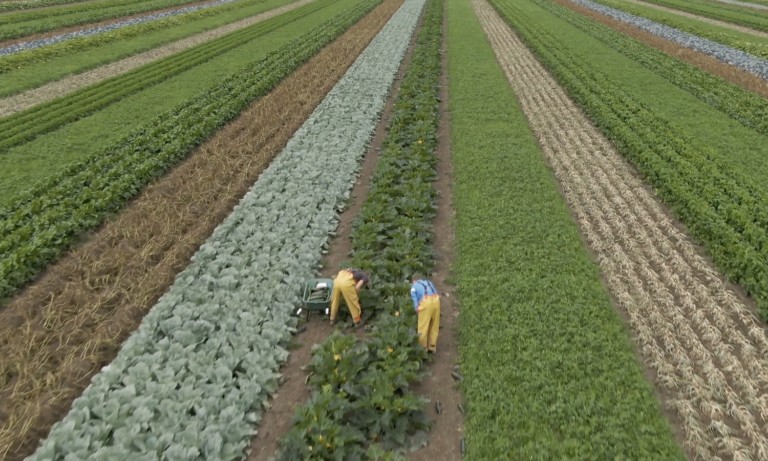
The Netherlands—a country smaller than the state of West Virginia—is the world’s second-largest agricultural exporter by value. That productivity, however, has come with environmental and social costs, according to researchers at Wageningen University & Research (WUR). The current economic system prioritizes efficiency and growth over ecological and human well-being. “This efficiency, this focus on more, has come at an expense of animal welfare and human welfare,” Evelien de Olde, Researcher at the Animal Production System Group, says in the Food 2050 film, which premieres January 2026 in partnership with Media RED, the Rockefeller Foundation, and Food Tank. Together with Dr. Imke de Boer, Professor of Livestock and Sustainable Food Systems at WUR, de Olde wrote Re-rooting the Dutch Food System, a blueprint for transforming Dutch agriculture by redesigning how food is produced, consumed, and valued. They were named a Top Food System Visionary in 2020 by the Rockefeller Foundation. Their vision calls for a fundamental shift toward circular food systems that work with natural processes rather than against them. “A circular system to feed the soil, respecting the life of the animals, and creating more conscious consumers. This combination of elements makes more sustainable food systems,” says de Olde. One key change involves how land is used. In the Netherlands and globally, about 40 percent of arable land is used to grow feed for livestock instead of food for people. De Boer says that this is an inefficient use of land and nutrients that circular food systems can help correct. “When you produce plant-sourced food for our consumption, you also automatically produce all kinds of co-products that you can feed directly to the animals. You want to circulate nutrients into the system,” says de Boer. Protecting soil life is also critical to circulating nutrients. De Boer says a healthier, more sustainable food system uses intercropping, or planting multiple types of cr