Category Page entertainment

Mishelle

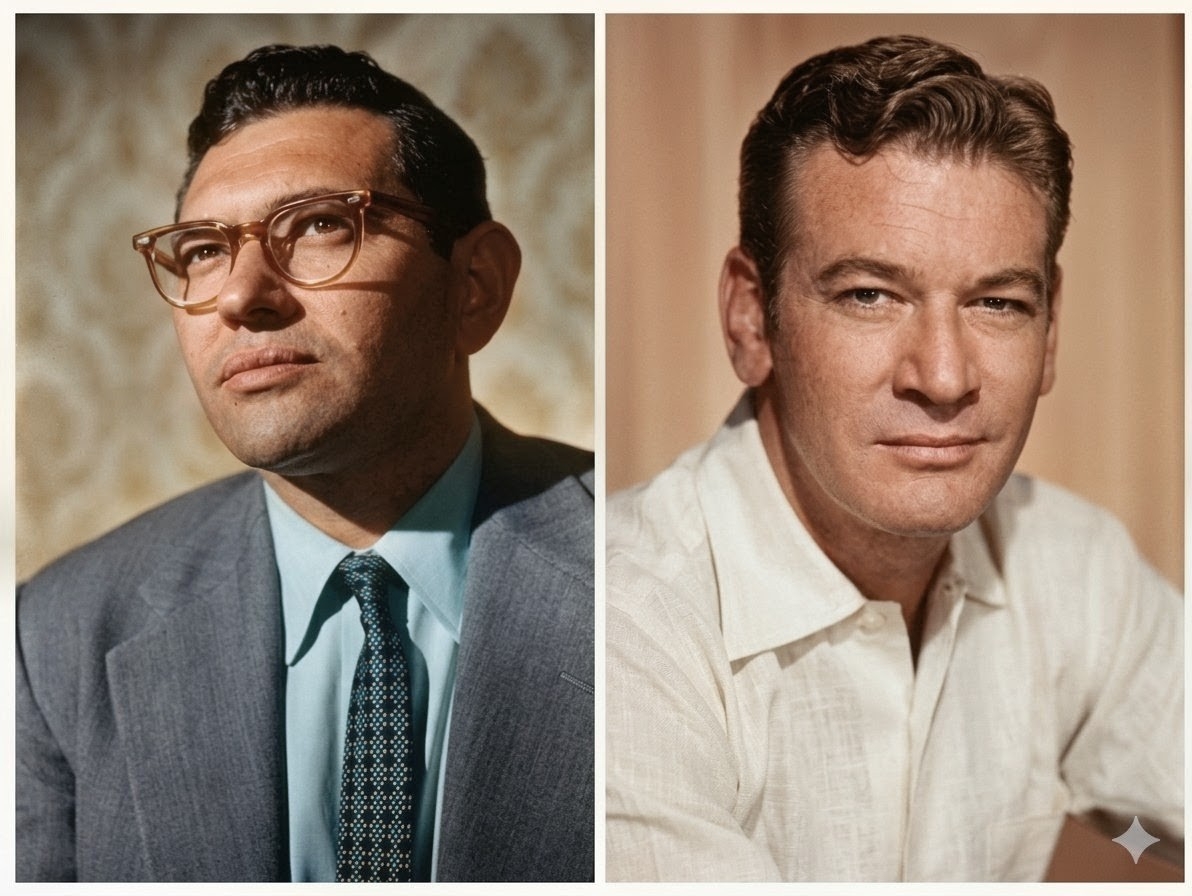
On May 14th, 1990, Sammy Davis Jr. lay dying in his hospital bed, his body ravaged by throat cancer. For weeks, Hollywood's biggest stars, including Frank Sinatra, Elizabeth Taylor, and Liza Minnelli, had visited him, but there was one person Sammy desperately wanted to see—his old friend, Dean Martin. Dean had always been different from the rest of the Rat Pack. He hated hospitals and avoided emotional farewells. But despite this, Sammy had held on to the hope that Dean would come. As the days passed, Sammy's hope began to fade, and he was left wondering if he would ever see his friend again. Then, on that fateful afternoon, Dean quietly walked into Sammy's room. Sammy’s fragile voice barely whispered his friend’s nickname, “Dino.” Dean, looking more fragile himself, sat by Sammy’s side. For a long moment, they simply looked at each other, memories of decades spent together flooding their minds. Dean handed Sammy a photograph from 1960, showing the Rat Pack in their prime. “We were everything,” Sammy whispered, and Dean responded, “The best there ever was.” The two men, who had shared more than just fame—bonds of friendship, respect, and loyalty—finally spoke of what had been left unsaid for so long. Dean admitted his shortcomings, telling Sammy how much he had admired him and how Sammy had taught him what true class was. Sammy had always fought discrimination with grace, a quality Dean had never fully appreciated until now. As Dean choked up, he told Sammy, “You saved my life once, not literally, but you saved who I was as a person.” In Sammy’s final moments, Dean’s visit brought him the one thing he had always longed for: the acknowledgment and gratitude from the one person who had been by his side through it all. And for both men, it was a final, unforgettable moment of love, friendship, and redemption.

dianaroberts

What the...my son just took this about 30 minutes ago

He's an artist and wants to paint our house at night for a competition. He went outside to take reference pictures. He saw nothing unusual while taking the picture, just the house, the roof had nothing on it. We're quite shook up. What do you think? Can someone with expertise in these matters take a look? Strange stuff has always happened here, noises, items being moved etc, we actually don't pay it much attention anymore we're so used to it. I believe I even saw a ghost once, but this doesn't look human to me. We live in Ireland, if it matters. And before people weigh in with the crappy phone comments, that's what we said. His phone broke last week and he's using an old one of mine, it's almost five years old. #WeirdFinds #DidThatHappen #Creepy

What the...my son just took this about 30 minutes ago
justme

While filming Pirates of the Caribbean, Johnny Depp had a moment that perfectly matched the unpredictable spirit of Captain Jack Sparrow. During one scene, Depp believed the drink he was about to take was simply water, something actors often use on set when a scene requires them to drink repeatedly. But when he took the shot, he quickly realized it was actually real rum. The unexpected moment added a bit of genuine surprise to the scene and became one of those funny behind the scenes stories fans love hearing about. Depp had already brought a wild and unpredictable personality to Captain Jack Sparrow, and moments like this only added to the legend surrounding the character’s creation during the early days of the film. Behind the camera, the Pirates of the Caribbean set was known for its playful atmosphere and creative freedom. Depp’s portrayal of Jack Sparrow was already full of improvisation, unusual movements, and quirky humor. Stories like the accidental rum shot remind fans that sometimes the most memorable parts of filmmaking come from unexpected moments that happen when the cameras are rolling.

justme

In 1954, sponsors demanded she fire her Black co-star on live TV. She smiled politely, gave him more airtime instead—and lost her show for it. Betty White spent eighty years making America laugh—and just as long dismantling every boundary Hollywood placed in her way. Before she became America's grandmother, before she was the nation's sweetheart, before the memes and the late-career renaissance, Betty White was a 1940s television insurgent doing things women were simply not allowed to do. She wasn't just acting on television. She was writing scripts. Producing segments. Running entire shows. Making creative decisions that were supposed to be reserved exclusively for men. At a time when women weren't welcome in writers' rooms, when female perspectives were considered commercially unviable, when actresses were expected to smile, say their lines, and defer to male authority on every creative question, Betty White controlled her own content. While other actresses waited passively for roles to be offered, Betty built them herself—armed with impeccable comedic timing, sharp intelligence, and a smile that could disarm and devastate in equal measure. Then came 1954, and the moment that revealed exactly who she was beneath the charm. Betty was hosting her own variety program, The Betty White Show, on NBC. It was a daily talk show—live, ambitious, and entirely under her creative control. One of her regular featured performers was Arthur Duncan, a gifted Black tap dancer whose performances lit up the stage every week with genuine joy and extraordinary talent. Then the letters started arriving. Angry viewers—especially from Southern affiliates—demanded Arthur Duncan's immediate removal from the show. They didn't want to see a Black performer featured regularly on their television screens. Sponsors echoed the complaints, threatening to pull advertising support. . #

justme

97 years ago today, January 17, 1929, Popeye the Sailor Man made his first appearance in the King Features comic strip Thimble Theatre. The spinach-loving sailor soon became so popular that the strip was eventually renamed after him. In 1933, Fleischer Studios—run by Max and Dave Fleischer—adapted Popeye and the Thimble Theatre characters into a series of theatrical cartoon shorts for Paramount Pictures. These cartoons became some of the most beloved of the 1930s, with production continuing through 1957 under both Fleischer and later Paramount’s Famous Studios. Today, the shorts are owned by Turner Entertainment and distributed by Warner Bros. Popeye’s cultural impact is undeniable—TV Guide ranked him #20 on its "50 Greatest Cartoon Characters of All Time" list in 2002. #Popeye #ThimbleTheatre #ClassicCartoons #AnimationHistory #1930sCartoons #SpinachPower #WarnerBros #FleischerStudios

Izze

This post is Inspired by the Movie Fake it has 8 Episodes on Tubi for Free the movie is a chilling reminder of how narcissistic manipulation unfolds in modern dating and how easily someone’s reality can be slowly unraveled. Narcissists don’t show up with warning signs they show up charming, attentive, successful, and emotionally intense. It often begins with love bombing constant messages, overwhelming affection, and talk of a perfect future. On dating apps especially this kind of deception can thrive!!!!…with carefully curated profiles, filtered images, and rehearsed stories, someone can manufacture an identity that feels tailored and made for you today and let’s call it Building You A Bear …there is no shared community, no long-term accountability just instant access to people who are open, hopeful, and seeking connection and some are so desperate they attract the very thing within that needs healing and what follows can be mirroring your values to seem like your soulmate ..your future faking with promises that never materialize and emotional highs and lows that keep you confused and chasing the version of them you first met wanting to make them feel all better when it’s all gaslighting that makes you question your own instincts and blame shifting that turns their dishonesty into your insecurity…. Dating apps themselves aren’t evil but they can provide emotionally unhealthy people with low-risk access to others who genuinely want love but lack it and the deeper danger isn’t just who is out there it’s losing yourself in the pursuit of someone else…When we focus more on seeking validation and companionship than nurturing our own happiness and self-worth we become more vulnerable to manipulation…Healthy love doesn’t feel confusing, destabilizing, nor addictive. It feels steady, safe, and consistent and the biggest red flag is often how quickly everything feels so perfect….so Protect your peace, trust your intuition, and never abandon your own growth and happiness

justme

"The machine crushed his fingertips on his last day at the factory. His boss said his guitar career was over. Instead, he melted a plastic bottle, built fake fingertips—and accidentally invented heavy metal. "December 1965. Birmingham, England. Tony Iommi was seventeen years old, working his last shift at a sheet metal factory. It was supposed to be his final day. He'd been offered a professional music gig—a real paying job as a guitarist. He was finally escaping the factory, escaping the grinding industrial monotony of working-class Birmingham. One more shift. Eight more hours. Then freedom. At 4:30 PM—thirty minutes before the end of his shift—Tony was operating a metal press. A massive machine that stamped and cut sheet metal. He was tired. Distracted. Thinking about his new life as a musician. The machine came down. Tony's right hand was underneath it. The press severed the tips of his middle and ring fingers on his right hand—his fretting hand. Blood everywhere. Bone exposed. The fingertips were gone. Crushed beyond repair. When Tony woke up after surgery, heavily bandaged, the first thing he thought about wasn't the pain. It was his guitar. And the second thought: My life is over. For a guitarist, losing fingertips on your fretting hand is catastrophic. Those are the fingers that press down on strings, that create chords, that make music possible. Without fingertips, you have no sensitivity. No control. No ability to feel where the strings are. Tony's factory foreman visited him in the hospital. "Look on the bright side," the foreman said. "At least you weren't going to make a living with your hands anyway. "Tony stared at him. "I'm a guitarist. "The foreman went pale. "Oh. Well... I suppose you'll have to find something else to do. "Tony went home to his parents' house, his hand wrapped in bandages, his dreams destroyed. He was seventeen